Application translation

Wholesale solar pv inverter lots, written from the site outward

Wholesale here means a quantity a business buyer wants priced on one basis. It does not mean goods are sitting in a warehouse this desk controls. Start from the project, then name the inverter configuration the lot has to satisfy.

Discuss Project Requirements
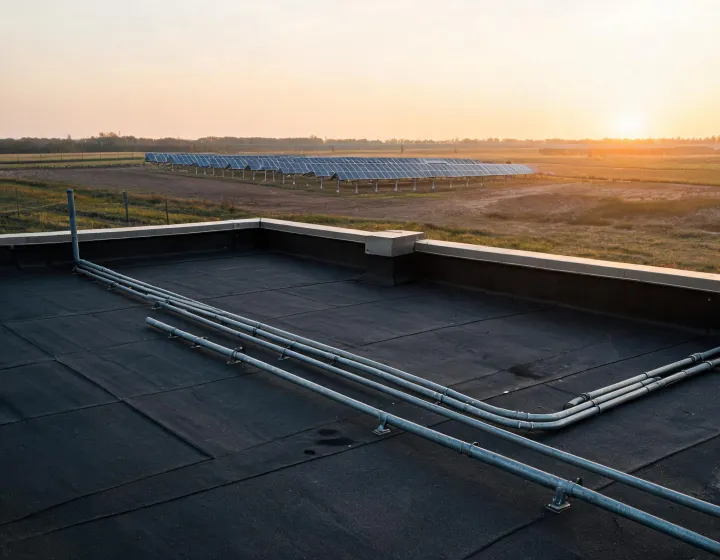
Aerial of a commercial roof and a ground-mount row used as sourcing context
  • Specification: AC rating, DC range, phase and protocol
  • Quantity: units, stations and separate spares
  • Destination: US delivery point and receiving constraints
  • Timing: requested window, subject to supplier confirmation

Where the same product word means a different purchase

Commercial rooftop lot

Application: commercial rooftop inverter lot. Interface question: check the site voltage and phase on the single-line diagram, then identify weather exposure, clearance and mounting requirements separately. RFQ unit: inverter quantity plus an explicit spare count.

Ground-mount lot

Application: fewer, larger stations. Interface question: 1500 V DC strings versus a 1000 V DC design already frozen in the study. RFQ unit: station count, with medium-voltage transformers kept off this line unless the buyer adds them.

Storage-linked purchase

Application: PV plus batteries on one interconnection. Interface question: ask the reviewer to compare AC-coupled and DC-coupled equipment, voltage limits, controls and supported operating modes. RFQ unit: hybrid inverter or PV inverter, stated separately from usable capacity in kWh.

Canopy beside chargers

Application: shade structures that also carry PV. Interface question: the inverter AC rating versus the charger load is a service study, not an inverter catalog fact. RFQ unit: PV inverter quantity only. Charger connectors and OCPP belong on a different request.

Campus energy room

Application: several buildings, one procurement. Interface question: a shared protocol and a SCADA point list, or separate monitoring per building. RFQ unit: a line per rating so a wholesale discount cannot hide mixed models.

Two arguments buyers bring to the same lot

Central or string conversion

Supporters point to fewer devices, simpler spares and a layout that suits an unshaded block. The tradeoff is a larger outage when one unit stops, and less visibility at the module.

Module-level conversion

Supporters point to shade, per-module monitoring and service that can swap a small device. The tradeoff is more connection points, more firmware images and a different spare plan.

Neither side is a default for a wholesale solar pv inverter order. Write the shade study, the monitoring expectation and the maintenance crew size into the brief. DC-to-AC ratio, if the engineer already set it near 1.20 or nearer 1.40, is attached as their figure. String current and maximum power voltage come from the module submittal, then the inverter supplier confirms the window.

A second choice appears when batteries are included. An AC-coupled proposal may preserve existing PV equipment; a DC-coupled proposal uses a different shared DC architecture. Compare the actual energy paths, controls, retrofit work and exclusions with the qualified reviewer. The DOE Solar-Plus-Storage 101 overview, published March 11, 2019 explains the architectures; its historical prices are not current quotes. Round-trip efficiency needs a complete system boundary and test basis, while battery depth of discharge and thermal management need storage documents.

Before award, agree a sample or pilot review with the proposed supplier: identify model and firmware, record the required grid voltage and operating temperature, compare label and drawing against the submitted datasheet, and record protocol checks and deviations. Set the acceptance criteria and responsible reviewer before testing; sample availability, cost and timing require confirmation. This is a review plan, not a completed test or engineering approval. Include budget currency, per-unit or whole-order scope and high-end, mid-range, budget or undecided preference when comparing the resulting offers.

Lot comparison fields

  1. Specification. Rating, phase, protocol and enclosure for every line in the lot.
  2. Quantity. The wholesale count, the spare count and the unit of measure.
  3. Delivered scope. Who pays freight to the US site, which accessories ship, which stay optional.
  4. Supplier documents. One datasheet per model code, not one brochure for the pile.

Unit price is discussed after those four. A lower inverter price that drops the monitoring license is a different wholesale offer. See product cards, field matching and the brief.

Context numbers that change the lot, when the study already has them
Context clueWrite it beside the lot
rated powerper unit, such as 36 kW, 80 kW or 250 kW
MPPTtracker count, input count per tracker and current limit recorded separately
maximum power voltagestring Vmp around 400 V or 700 V
open-circuit voltagecold Voc around 500 V or 950 V
string current10 A, 16 A or 28 A from the module submittal
maximum system voltage600 V DC on an older roof, 1000 V DC or 1500 V DC on a new block
DC-to-AC ratio1.12, 1.28 or 1.42 from the engineer, not from this page
enclosure ratingroof edge versus inverter pad
usable capacitykWh only on a storage line, for example 100 kWh or 500 kWh
depth of dischargea battery limit, quoted by the storage supplier
battery management systemalarm list stays with the battery vendor
thermal managementcabinet exhaust path at 35 C or 45 C ambient if specified

Translate the site, then ask for factory quotes

Send the application in a sentence, the ratings you already trust, the lot size and the US destination. Open questions can be listed as open.

Use the equipment planner if the architecture is still unsettled